
Chemistry AI
Reaction mechanism solver
Organic chemistry is electron-pushing. Chemistry AI walks through the mechanism so you can see where electrons move, which intermediate appears, and why that path beats the competing one.


Why the mechanism is the real problem
Getting the product right on a multiple-choice item is not the same as being able to draw the arrows. A reaction mechanism solver has to show the sequence: what is nucleophilic, what is electrophilic, and how charge is accounted for in each step.
Chemistry AI’s result view is built around that work — a mechanism drawing guide, electron-flow rules, reagent roles, and the mistakes that quietly lose points.
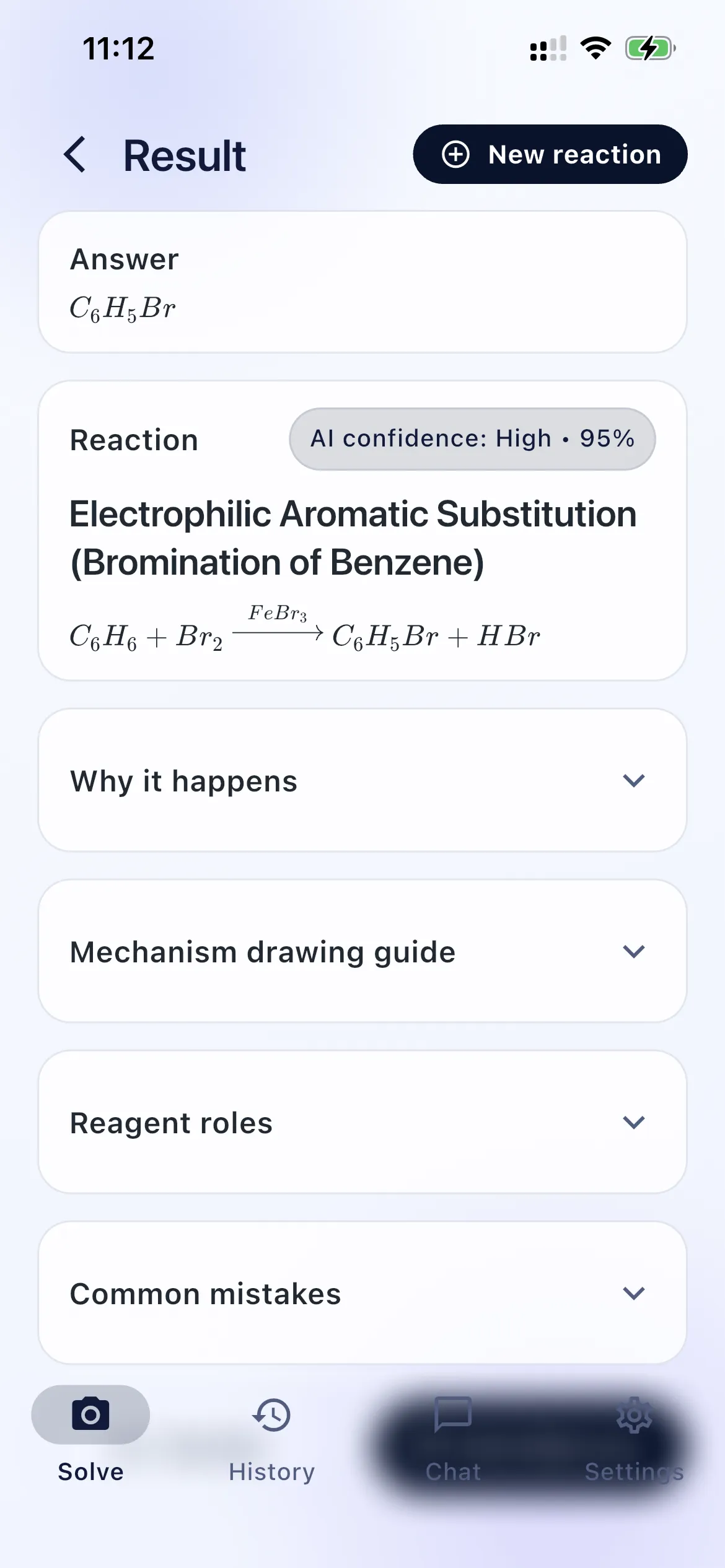
Electron flow and curved arrows
Curved arrows start at electrons — a lone pair or a bond — and show where density moves. If you reverse that habit, every later step becomes guesswork. Chemistry AI keeps the explanation in that language so you can redraw the same mechanism on paper.
Problems a mechanism solver is for
- SN1 vs SN2 when both look plausible on the page.
- E1 vs E2, and whether a bulky base changes the story.
- Where the arrow should start in a carbonyl addition.
- Why a “minor” product appeared in your practice set.
For identifying the product first, use the organic chemistry solver page. Topic notes live under Learn, starting with the SN1 vs SN2 guide. Related guides: organic chemistry AI, homework help, organic chemistry tutor.
Mechanism solver FAQ
What is a reaction mechanism solver?
A mechanism solver does not stop at the major product. It explains the sequence of elementary steps — what is attacking what, where electrons move, and which intermediate appears along the way.
Does Chemistry AI teach curved-arrow notation?
Yes. Explanations are written around electron-pushing logic: arrows start at electrons (lone pairs or bonds) and show where density moves in each step.
Can I ask a follow-up if a step is unclear?
Yes. After a solve, you can keep asking questions in chat — for example why a particular reagent was used, or why SN2 wins over E2 in that example.
Open the problem in Chemistry AI
Snap the reaction on your phone and follow the mechanism step by step.